
The carpet cleaning industry is evolving, and one of the biggest trends is the shift toward eco-friendly practices.
But what does “going green” really mean for your carpet cleaning business, and is it the right move for you?
Let’s dive into the benefits, challenges, and the greener methods available to help you make an informed decision.
First, let’s talk about the positives.
Going green can be a game-changer for your business. More and more customers are looking for sustainable services, and offering eco-friendly options can help you stand out in a competitive market. It’s not just about attracting new clients, though. Green cleaning products are often safer for both your customers and your employees, reducing exposure to harsh chemicals and improving indoor air quality.
Plus, if you use a low moisture method, by using less water and energy, you’re actively reducing your environmental footprint. And let’s not forget the marketing potential. Promoting your green credentials can enhance your brand image and build trust with clients who value sustainability.
Of course, it’s not all smooth sailing. Going green does come with its challenges.
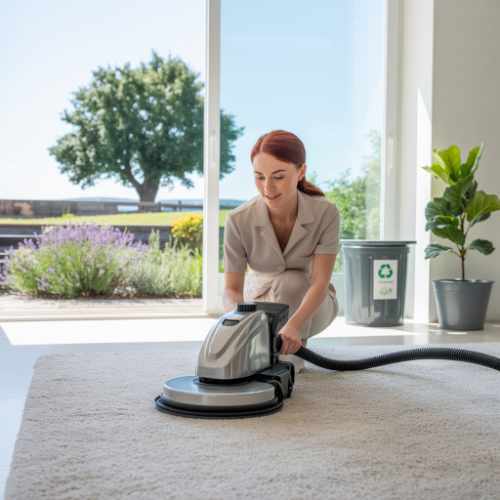
For starters, eco-friendly products and equipment can be more expensive upfront, which might feel like a hurdle, especially for smaller businesses.
There’s also a bit of a learning curve since green methods often require additional training to ensure you’re using them effectively.
And while methods like dry compound cleaning are great for routine maintenance, they don’t always pack the same punch as traditional techniques when it comes to tackling heavy soiling or tough stains.
You may also find yourself needing to educate clients about the benefits of green cleaning, as not everyone is familiar with what it entails.
So, what are the greener methods available, and how do they stack up?
One of the most eco-friendly options is encapsulation cleaning. This method uses a low-moisture, polymer-based detergent that crystallizes dirt, which is then vacuumed away. It’s incredibly efficient, using up to 80% less water than traditional methods, and carpets dry in under an hour. It’s perfect for light maintenance and environmentally sensitive sites, though it’s not ideal for heavily soiled carpets.
Another option is hot water extraction, often referred to as steam cleaning.
While it’s not as water-efficient as encapsulation, it can still be eco-friendly if you use biodegradable detergents. This method is excellent for deep cleaning and removing allergens, making it a great choice for homes with pets or allergies. However, it does use more energy to heat the water and has a longer drying time.
For those looking for a quick turnaround, absorbent-compound cleaning is worth considering. This method involves spreading a detergent-coated powder or foam over the carpet, which absorbs dirt and is then vacuumed up. It’s nearly waterless, making it a good choice for delicate fibres like wool or silk, but it’s less effective on deep soil and can leave residue if not vacuumed thoroughly.
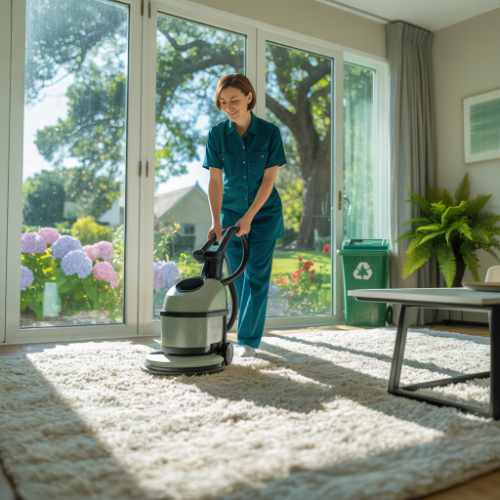
Other methods, like bonnet cleaning and carpet shampooing, can also be adapted to be more eco-friendly by using green-certified products.
However, they come with their own limitations, such as only cleaning the surface or leaving sticky residues if not done properly.
If you’re thinking about going green, start small. Consider switching to biodegradable, non-toxic cleaning solutions and investing in equipment that uses less water and energy. Educate your clients about the benefits of these methods, and don’t be afraid to market your eco-friendly approach—it’s a great way to attract like-minded customers.
While going green might require some adjustments, the long-term benefits for your business, your clients, and the environment make it a worthwhile investment.